Anything But Selfies

I hate social media, and the reason I hate it, is because hating things on social media seems to be the best thing about it. It’s a confusing paradox. Last night someone pissed me off cause they hated something I also hate. I hated them, because they hated the thing I hate, in a snarky and off-putting manner that wasn’t in keeping with the more dignified, and quirky way in which I hate things. At least I thought so. I hope me saying that doesn’t make you hate me.

Probably the thing that I hate the most about the internet is the “selfie”. Not anyone specific’s selfie, just the concept. When I went to Japan way back in 2001 I took a few “selfies”, because I travelled there alone and needed proof I had been. It was awkward and uncomfortable, and I felt like a bit of a loser for having no friends who could take these pictures for me. A man alone taking pictures of himself, was viewed with the same suspicion as a trenchcoat owner in a play park. That was how it should be. Why was he alone? Was he a murderer? A lunatic? A Backstreet Boys fan? Turns out he was likely none of those things, just a normal, narcissistic arsehole like the rest of us. The only thing that prevented us from taking nothing but selfies back then was apparently the stigma, and once that evaporated so did our dignity. Now every second Instagram account is just pictures of the owner’s face blocking the view.

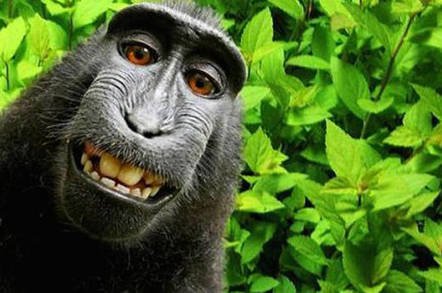
We should have seen it coming. It’s not like we haven’t always been narcissistic. Ever since the days of nobility spending hundreds of peasant’s worth of salary on oil paintings, we have wanted nothing as much as to look at our own faces. Coke had its first sales increase in more than a decade when it introduced the idea of adding names to their cans and bottles. We as a species are so self-involved, so desperate to be recognised as special, we will actually spend extra money just so we can drink from a can that says we have a common enough name to make printing it economically viable. It’s our biggest, most easily exploitable failing. We are idiots, little more than apes. Want proof? What was the first thing a monkey with a camera ever took a photo of? Itself.

I am more than willing to bet that if that ape had access to a computer it would also be posting that it has an IQ of 172 according to the test it just took on Facebook. Taking an IQ test on Facebook should automatically qualify you to fail it. “Only the smartest will be able to spot the…” If that sentence doesn’t end with the words, “data mining capabilities of this test”, then once again, finding the solution means you don’t qualify for the descriptor.

Facebook’s entire business model is based around selling our predictability. They are only able to promise that an advertiser will get x number of likes per x amount of cash they spend, because they know exactly what we will click on and when. That’s how mundane, and predictable we each are. If you see something on the internet that claims you are special it’s probably just selling your data to sex-traffickers or worse, McDonalds, cause you aren’t. You, like me, are a number.

We aren’t special so we need to stop acting like we’re among the most intelligent and handsome, just cause an app told us we are smart, or that we look a lot like the celeb Selena Gomez. No matter how many filters you use you don’t look like Selena Gomez – you look like the selfie monkey. So stop photographing your face, and turn the camera outward. At least then you’ll likely get a better view, and I will have one fewer thing to hate.

The Award Winning Podcast – Season 2 – Episode 6 – Dillan Oliphant

The Award Winning Podcast
The Award Winning Podcast Podcast
The Award Winning Podcast - Season 2 - Episode 6 - Dillan Oliphant
Loading
/

Dillan Oliphant is perhaps most well known for the fact that he won SA’s first comedy Roast battle. Dry, and quiet it came as a big surprise for everyone who only kind of knew him. Here he roasts me mercilessly while talking about his career, and everything leading up to it. It’s unpleasant.

The Award Winning Podcast – Season 2 Episode 5 – Ebenhaezer Dibakwane

The Award Winning Podcast
The Award Winning Podcast Podcast
The Award Winning Podcast – Season 2 Episode 5 – Ebenhaezer Dibakwane
Loading
/

Rapidly becoming one of the biggest stars in the SA comedy firmament Ebenhaezer Dibakwane brings his infectious enthusiasm to the stage to talk about his time as a youth pastor, homelessness, being arrested, and which SA politician he would most like to sleep with.

The Award Winning Podcast – Season 2 Episode 4 – Dave Levinsohn

The Award Winning Podcast
The Award Winning Podcast Podcast
The Award Winning Podcast – Season 2 Episode 4 - Dave Levinsohn
Loading
/

In this episode hilarious improv comic Dave Levinsohn talks about what it was like growing up during Apartheid, school, going to the army, and how that has impacted on him as a person, a parent and a comedian. It’s the longest podcast to date cause he just won’t stop being funny.

How To Judge A Parent

There is a new saying, that one should never judge another parent. The idea is that anyone with a small child, no matter how attentive, is likely to experience melt downs and moments of almost monumental shame for no reason while raising their young one. I say this is bullshit. Judge away. If my child is lying on the floor of a store thrashing his legs and arms, you would be only be right to judge me. If I don’t hear hear you whisper about what a bad parent I am, then at the very least I know you and I have nothing in common, cause that’s what I would be doing.

Probably the worst side-effect of being a parent is that one is forced into contact with other people’s children. My toddler and I like to go down to the park – he to run and climb, and me to be told to run and climb by him, like I am on boot camp and the drill sergeant calls me “daddy”.  Having a job done in odd hours, I often get to take him on week days when the park is silent, but when it isn’t I find we are often confronted with the worst specimens of childlike humanity. And on those days judgement comes in handy.

The other day a boy, who I was assured was five, but who looked as if his beard was coming through,  backed my son into a corner on a jungle gym to tell him a story. The tale went as follows, “And then the people died, and do you know what happened next?” he said. My kid, being 20 months old, polite, and having never heard a story of this kind before dutifully answered, “no” thereby encouraging young Shakespeare to continue.

“Blood came pouring out of their heads and they turned into bats, and do you know what happened next?” he asked, the gripping cliffhanger dangling in the air.

“No,” my son said again, not yet having learnt from his previous error. “They were made into stone, before exploding, and guts went everywhere. Do you know what happened next?” the elocutionist enquired, while I stood starring at him like shit smeared on a new rug.

At this stage the child’s mother must have finally noticed what was going on as she bustled over and told her young thought-leader that he probably shouldn’t be terrifying the baby. He drooled on his chin, screamed something nonsensical and dived head first down the slide. My son turned to me, shrugged and demanded I run to the swings.

I judged that mother that day. Her inattentiveness lead to a really awkward situation. What was I supposed to do? Remind her son he was speaking to a baby? Shout at him? Wade in and toe punt the hobbit over a swing set? Socially we are not allowed to do those things anymore, and so I judge. Giving some sense of shame to the parent is our last defence in the face of a badly behaved child, and if this bothers you, if you are worried that one day it could be you on the end of my glowering silence remember, “you will never experience a public tantrum if you just keep them locked in a cupboard at home.”

The Award Winning Podcast – Season 2 Episode 3 – Loyiso Gola

The Award Winning Podcast
The Award Winning Podcast Podcast
The Award Winning Podcast - Season 2 Episode 3 - Loyiso Gola
Loading
/

In this laid back episode SA’s premier political comedian Loyiso Gola talks about his international travels, the night he took a very surprising woman home, and what being on Tinder is like in New York.

A Bully’s Downfall

Cyberbullying is a great term for what happens when our inevitable robot emperors throw us to the world’s last starved lions in their murder dome circuses, but we have wasted it to describe people dehumanising others on the internet. Personally I have never really had much respect for cyberbullying having undergone a lot of real world bullying while I was at school, and generally believe that while I was being shoved in a rubbish bin a rude email would have seemed like a carnival, but I leave it to you lot and the comments section to prove me wrong.

Being one year younger than most of my peers at school, and about five years physically less developed, I suppose bullying was inevitable. *

The main protagonist was a boy by the name of Chris Taylor**. Chris was blessed with the facial features of a smashed clam, and the physical prowess of Stephen Hawking circa 2019, but he did manage to carve himself a rather niche school career as capering jester to the A Team rugby guys – he made them laugh at the expense of the smaller boys, and was rewarded by being able to kiss their girlfriend’s unattractive mates. From standard six to eight there wasn’t a class I was in where he wouldn’t call me “gay” – the all boy’s school equivalent of an Oscar Wilde retort – to peals of laughter from his friends.  I wasn’t left with much option, but to put my head down and endure it as he, and those who wanted his space as gibbering marmot to the rugby set, tore into me with an enthusiasm they usually only reserved for rubbing themselves off around a soggy Marie biscuit.

It all ended one physics class in Standard 8 (Grade 10 for younger readers) as Chris once again attempted to mock me over something or other. Fully aware that retorting would probably result in violence being done unto me, I snapped and slowly, piece-by-piece, feature-by-feature, began to dissect Chris’s failings much to the uproarious delight of his friends. It wasn’t hard. His face looked, as I mentioned before, like the bloated carcass of a beached whale that had recently been dynamited by a group of hillbilly villagers whose hatred of each other was only outdone by their, until recent, hatred of the whale. At first he stared at me with shock, and then anger, before, tears welling in his uncomprehending eyes, he stood up, came around to my table and punched me. I laughed out loud, and the captain of the A-Team stood up, took him by the shoulder, guided him to his seat, and told him “you aren’t coming back from that. Sit down”.

It should have been a moment of huge delight. Years of being bullied ended in one terrific torrent of shame and humiliation for my antagonist, but instead I was just sad. I felt bad for Chris as he sat having my best lines zinged back at him for the rest of the class. He looked utterly defeated, hunched in his chair, like the gargoyle rejected from the crenellations of Notredame cathedral for being too ugly. I had won, at last, and not by a small margin, wasn’t that reason enough to feel something more than dejected relief? Instead I just felt like I had been dragged down to his level. I was part of it, polluted by it. And it did not feel good.

It was a feeling I only became associated with again this week as South African cricket arch-nemesis Australia were brought low by their own hubris. No doubt the blows I dealt Chris would never have hit so hard, had he not been as arrogant with his taunts in the past, and likewise it is the same with Australian cricket. Sitting at the top of the pile, morally judging those below them, the team has been brought crashing to earth, not only by the media, but on the pitch where the Proteas utterly humiliated them, and once again I feel bad. I mean who cheats and still gets thrashed by 322 runs?  I wish this had never happened to them, and that the age old rivalry could continue unsullied by this nonsense. I already miss the Australian teams that we hated for their arrogance, but respected for their sheer sporting class. Steve Smith and his travelling team of angry cheats haven’t a patch on the touring teams of the past, who weathered the animosity and even added occasional moments of humour, and grace on the rare occasions they lost. Instead of feeling delight at a crushing victory, I just feel sad that what we as South Africans had in an arch nemesis has now gone, and we have been polluted by association with their downfall. Will we ever fear Australia again or will they, like Chris after that fateful day in Physics class, never hold the psychological upper hand again?

* In the telling of this, some facts have been stretched for comedic effect, and revenge.

**Absolutely his real name


Toddler’s Ruin Your Youtube

As the father of a toddler my Youtube channel has now been shot to hell. Whereas once I was recommended episodes of TV panel shows from the UK, the latest music videos by my favourite bands and hilarious John Oliver clips, I am now directed towards various nursery rhyme sites, singalong songs, and rather bizarrely, highlights from Ru Paul’s Drag Race – what are other parents doing with their toddlers?

This is not strictly my fault. The algorithms on these sites are quick to latch onto any new behaviour, and my son just happens to be entirely fascinated with any object that might contain a game, TV show, or photo of himself. If he is around, I find it impossible to hold my phone anywhere in the house without triggering some kind of instant, exhaustive battle for ownership that makes WWE look like kittens snuggling. The second my phone is out my pocket, even to take a call, my son rushes me like I’m the ball carrier, and he is Francois Pienaar off the side of a scrum. All my photos are of him moving toward the camera to see what I am taking a photo of.

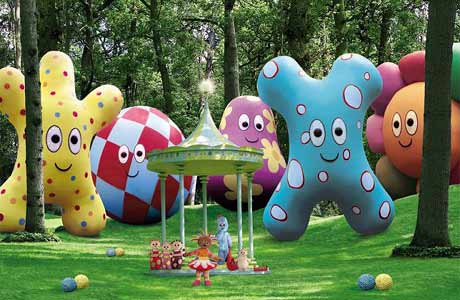
Thanks to Youtube I am already aware that parents who once watched the nursery rhymes I am watching with him were soon onto Paw Patrol (somehow I find I already know the theme tune), Jake and the Neverland Pirates, and episodes of In the Night Garden, a show set in a horror park, filled with sentient balloon people, a group of men who never wear trousers, a woman who lifts her skirts for anyone whose looking, and a man whose desperate loneliness leads to him going to bed each night with a stone. It’s a show adults universally describe as being, “Bizarre” and/or “Creepy”.

The prevalence with which this show is mentioned online makes my initiation into the cult seem inevitable. Am I really one day going to allow my child to become totally absorbed by poor miserable Makka Pakka, depressively stacking and washing stones, just so I can get five crucial minutes to take a shit? The answer is yes, and the reason is that I think what we had as kids was, if not worse, then at least just as inspired by hallucinogens.

Lets starts with the obvious. Bob is a sponge that lives in the sea. In a pineapple. The Flintstones have a Martian friend named “The Great Gazoo” and the main enemy of the Teenage Mutant Ninja Turtles was a brain who lived in the stomach of a nightclub bouncer.

The Teletubbies were amorphous blobs with TVs in their stomachs, who lived on custard and toast and talked to a baby sun. They also look like the last faces you’ll see before you’re strangled to death by bath salt addicts at a funfair. The only female smurf was constructed in a lab by an evildoer intent on leading the good Smurfs astray, Pokemon is about kids who keep magical animals in tiny cages, and then force them to fight each other, and The Carebears was about a gang of mystical cloud beings, who watched every single child, 24/7 looking for signs of unhappiness and then shot rainbows out of their stomachs to alter people’s moods. Henry the train gets bricked up alive into a tunnel in Thomas the Tank Engine, Johnny Bravo and Pepe Le Pew are sexual predators and Donald Duck frequently had roast birds for lunch.

Keeping it local Pumpkin Patch had a dancing dog, fruit that sang, and two puppet cousins so nightmarish they made you wish humans didn’t have hands, while Sarel Seemonster, Karel Kraai, Bennie Boekwurm and the other characters from Wielie Wielie Walie are proof that the Apartheid government wanted English kids to suffer too. No one knew what was happening in Liewe Heksie, Mina Moo was a talking cow who was trying to get you to drink her udder juices, and if Zet had ever come burbling into my room I likely would have kicked him down the stairs.

The truth is that children’s TV has always been weird. We don’t pay artists enough, and children’s entertainers even less. As a result it’s only shaggy drug addicts with no talent, and a penchant for child abuse, who dress up like wizards and prowl the grounds of Arts Festival. It is there they are promptly picked up to develop TV shows. This has worked for generations, not because the peyote gives these criminals any additional insight into a child’s mind, but because children are new. The whole world is a wonder to them. They can spend hours just hiding in a bush or throwing rocks at other rocks. The reason we remember the shows from our youth with nostalgia is that we saw them with a child’s brain. These shows appeared no more wonderful, or strange, than the rest of the world and it’s the memory of this feeling that triggers our nostalgia. Either that or the Xanax.

How To Lie To Children

The average person lies 3000 times a day. It’s a fact. Well okay, it’s not a fact, it’s a lie, but, like with real columnists, I wanted you to think of me as an expert on the subject. What’s true is that according to a 2002 study conducted by the University of Massachusetts, 60% of adults can’t have a ten minute conversation without lying at least once, and that lying makes you appear at least 12% more interesting to members of the opposite sex. One of those two stats is also a lie.

The other day I told my 19 month old son a lie. I told him the lamps in the store were broken so we didn’t have to turn them on and off for the rest of the day, and so began my slide into the deluge of lies I will inevitably tell him over the course of his life. I am prepared for it. As a middle-aged man I have long ago grown comfortable with the fact that sometimes it’s better to tell a lie than to hurt someone’s feelings, or even just to perk up a boring conversation. I have also comforted myself with the fact that this is true because someone much smarter than me proved it is.

Immanuel Kant looked closely at society’s long-held moral principle that, “it is a duty to tell the truth” and suggested that it would, if taken unconditionally and singly, make any society impossible. To show this he created a scenario, in which he asks you, the reader, to imagine that you live in an isolated house in the woods. You are all alone, when you hear a loud knocking on the door one night, and you open the door. A terrified man (let’s call him Bakkies Botha) stumbles in, screaming that he is being chased by a murderer who is trying to kill him. “Hide me!” he sobs. So you do. You lock him in the basement and go back upstairs.

Later there’s another banging on the door. This time, when you open it, the murderer stands there with his weapon, angry and clearly intent on violence – for the sake of comedy, let’s assume he is beloved TV icon from the 80s, “Zet”. Zet describes Bakkies Botha in detail – Two metres tall, played for the Springboks, has the face of three day old road kill. “Do you know where that man is?” Zet asks. According to Kant, if we want to be truly moral, we have a duty to say “Yup, he’s in the basement”. You see Kant is arguing that in order for us to be good, decent people it is our duty to avoid moral ambiguity and to always tell the truth. Zet has the moral duty not to murder, and we are not responsible for what he does with the honest answer we give him. For Kant, lying really is black and white. Probably why they called him a Kant.

Since my son was born, I have thought about the concept of lying in some detail, and therefore feel no shame in the fact that I lied to a toddler simply to avoid switching a store lamp on and off, for hours on end, until the cashiers tossed us in the street. I have concluded that I am happy to use lying as a parental aid if it helps him to go through life a little less upset, or if it makes parenting fractionally easier.

It is, for instance, going to be much easier for me to say, “If you want to grow up big and strong, you have to eat your vegetables”, than what I really mean, which is, “your size is mostly genetically predetermined, as is much of your well-being. Eating your veggies is just one factor in a thousand unknowables that may affect health. The question of your mortality is highly arbitrary. You may never grow up at all, but eat your veggies because maybe they help, and they are a lot cheaper than the meat you like so much.”

When he catches me snacking, and asks what I am eating, I will always say, Brussel sprouts, Spur will only be open on his birthday, and “Barney the Dinosaur” definitely causes cancer.

I know that there are still parents out there determined to be totally honest with their children all of the time, never once deviating from the truth, and if they intend to be like that, I would urge them to remember some of these things:

“The dog went to go live on the farm” should be, “Bongo is dead and probably in a rubbish bin behind the vet”. “You are the most special, wonderful child in the world” is statistically unlikely. And instead of saying, “Mommy or daddy knows best”, just admit, “We haven’t a clue what we are doing, and don’t understand the long term consequences of most of what we say either”.

In the end I think it’s obvious that you too should lie to your kids. People who are lied to as children are more popular in the work environment when they grow up, earn more and live an average of 2.3 years longer. They don’t, or at least they might, but I have no proof for that, but then I think you get the point by now.

The One Thing Johannesburg Urgently Needs

After ten years of Jacob Zuma in charge and an economy that has decayed faster than the Protea’s one day batting skills, we finally have a new president. Cyril Ramaphosa is now tasked with not only undoing the damage of the predecessor, but also with setting the country on the right footing towards becoming a true global powerhouse. While his advisers have clearly got most aspects of this rejuvenation covered I would argue that there is one element he is totally forgetting – an abstract quality that defines every great country in the world, and one which South Africa finds itself sadly lacking in. While we as South Africans can happily state we are among the leaders of the world in political influence, resources, cuisine, history, culture and jaw dropping scenery, the one thing that this country has always been missing is a giant monster attack.

Anyone who pays attention to world history must know that all of the great countries have at some point, had their finest cities pillaged by some form of massive beast. New York was besieged by King Kong and The Beast from 20 000 fathoms. London has been beset by “Gorgo”. Tokyo has been ripped apart by “Godzilla” so many times, it has become a running joke. “Hong Kong” witnessed the fury of “The Peking Man” (Ironic now I know). “Ymir” destroyed Rome. Los Angeles, saw its end at the hands of “Them”. The documentaries “Colossal” and “The Host”, go into graphic detail on just two of the beasts that have curb-stomped Seoul. Bangkok got “Garuda” and even relatively insignificant Copenhagen was attacked by “Reptilicus”. To date the most horrifying movie monster this country has experienced is “Mr Bones“. How can Johannesburg call itself a “World Class African City” if it remains unscathed by massive beasts?

Johannesburg has two large problems when it comes to becoming a feast for a Kaiju. The first is that naturally it is lacking the skyline of those other more frequently attacked cities, while the second is its position as an in-land city. As such it has no easy monster spawning sites. Any monster that arises from the depths of an, as yet unknown, sea-trench would head straight for the easier, if totally unappetising snacks of Cape Town, Durban, or even, Port Elizabeth. Cape Town’s Clifton beach, Sea-point, and town centre, are begging to be ravaged, however the city provides nowhere at all for the beast to climb during the epic finale. It’s difficult enough to get a lost Spaniard off Table Mountain, let alone fight a 300 metre radioactive monster there.

Johannesburg does have the facilities. The glittering office towers of central Sandton provide a prime location for a monster of that magnitude, complete with taxi-drivers, who, for various reasons, are already running, and screaming in the streets. What more classic monster movie setting could we ask for, than for some mammoth beast to be clinging to the top of The Michaelangelo Tower swatting at a herd of social-media drones?

But where would this animal come from, and how would we lure it there in the first place? Certainly the few remaining mine-dumps, and their low level radiations, and poisons, do provide a birthing spot fit for a creature of that calibre, but the squat Tuscan-style complexes that surround the city like nervous policemen, aren’t exactly satisfying as monster fodder. What’s to stop our monster, who has spent aeons sleeping below the The Western Deep Level Mine, and finally burst to the surface, from simply turning around and going back into hibernation?

I think the mandate for Cyril and his team is clear: If we want our country to thrive, its most iconic city needs to do everything it can to lure a giant monster to the heart of Sandton, and capture that moment on film. What greater way could South Africa announce its presence on the world scene than by developing a series of glittering skyscrapers along all its major arterial routes, awakening some ancient horror and luring it to the business district, then letting it smash it all to pieces?

Apart from launching our country to the very head of the African economic table, this act would also have the added benefit of tearing down all the over-rated, terribly designed, glass monstrosities that are already in place in Sandton, and allow us to rebuild a CBD where neighbouring buildings take the appearance of the building next to them, and the lives of the people who live, and work in the city, into account. Right now Sandton looks like it was pieced together, by an angry, and uncaring ape with a CAD system, and a hammer, and I for one can think of no better way to fix this problem than to knock it all down.